


Local Energy Action
The EUSEW Local Energy Action Award recognises implemented sustainable energy actions, driven by a group of citizens, consumers, a municipality or other stakeholders, which contribute to the clean energy transition at the community or local level.
100 Projects Phasing Out Gas
Austria
Vienna clean energy drive nominated for 2026 European Sustainable Energy Awards
A pioneering clean energy initiative led by the City of Vienna has been shortlisted for the prestigious European Sustainable Energy Awards, recognising its impact in driving the transition towards a 100 per cent renewable heating and – when necessary – cooling supply by 2040. The ‘100 Projects Phasing Out Gas’ initiative feeds a virtuous loop, turning ideas into concrete action and back again, by showcasing replicable examples of individual building conversions that are then packaged into transferable knowledge.
Over two years, the initiative’s participants have replaced 1 030 gas boilers with local renewable energy systems, strengthening the local economy, and achieving annual CO2 savings of more than 2 300 tonnes. But its particular added value lies in translating the experience from those projects into transferable lessons, for example, on how to overcome barriers related to ownership and decision-making structures, as well as legal and procedural obstacles in multi-storey buildings.
“What we do is to turn ideas into concrete action by organising implementation as a curated learning programme,” explains project lead Petra Schöfmann, from UIV Urban Innovation Vienna, the climate and innovation agency of the City of Vienna, which is implementing the initiative.
Individual projects are identified through systematic research, targeted outreach, and open submissions, and selected based on technical and legal criteria. Selected projects furthermore receive expert advice on how to proceed, including suitable technology and supply options such as heat pumps, geothermal, solar thermal or sustainable biomass, as well as funding pathways, legal and administrative issues.
Schöfmann says the lessons learned are then translated into checklists, templates and decision-making tools, and fed back to the public administration, as well as to the construction and real estate sector, making future implementation faster and easier.
“What makes this initiative stand out is the scope and ambition,” says Dr. Stefan Sattler, head of the unit for Renewable Energy and Innovative Energy Solutions at the City of Vienna’s Energy Planning Department. “It brings everything together from technical solutions to social engagement, as well as the practical and legal implementation. It has created momentum and built the trust essential for further replication at a much larger scale until 2040.”
The concrete impact is already measurable. By December 2025, the efforts of the ‘100 Projects Phasing Out Gas’ community had highlighted 1 861 dwellings converted from fossil-based systems to renewable heating solutions, demonstrating feasibility at scale and creating a pipeline for the next phase.
“The initiative becomes especially scalable when this process is organised as a continuous learning loop,” Schöfmann explains, highlighting how the model could be replicated across Europe.“If this approach is adopted more widely, it can help cities across Europe accelerate the phase-out of gas, expand renewable heat, and deliver a socially just transition,” says Sattler.
“Action is urgently needed,” he adds, explaining that the heating and cooling sector accounts for around half of the EU’s total energy consumption, yet the share of renewables in this area was only 26.7 per cent in 2024.
The initiative 100 Projects Phasing Out Gas is one of three finalists shortlisted for the European Sustainable Energy Awards 2026 in the Local Energy Action category. The award recognises implemented sustainable energy actions, driven by a group of citizens or consumers, which contribute to the clean energy transition at the community or local level. It also inspires and motivates others to implement similar steps for an EU-wide deployment, resulting in economic and environmental benefits.
The other finalists in this category are Nova Energia Osona in Spain and the MultiHome project in Bulgaria. Nova Energia Osona has developed an energy project based on an alliance between local authorities and energy communities covering 50 municipalities in Catalonia. MultiHome offers a local cooperation platform for energy renovations in Bulgaria’s second city of Plovdiv.
The winner will be chosen through an online public vote, which is open from now until 31 May, and will be announced at an awards ceremony in Brussels on 9 June 2026.
EUSEW Awards celebrate Europe’s best clean energy projects and leaders
The European Sustainable Energy Awards (EUSEW Awards) recognise outstanding individuals, projects and initiatives that advance Europe’s transition to clean energy. The nine finalists have been selected by a high-level jury in three categories: SMEs Driving Energy Efficiency, Local Energy Action, and Women in Energy. The finalists will be submitted to an online public vote, which is open now until 31 May, and the winners will be announced during the EUSEW Awards Ceremony on 9 June 2026.
EUSEW 2026
The European Sustainable Energy Week (EUSEW) is the biggest annual event dedicated to renewables and efficient energy use in Europe and is organised by the European Commission’s Directorate-General for Energy and the European Climate, Infrastructure and Environment Executive Agency (CINEA). The 20th edition of EUSEW will take place in a hybrid format, onsite in Brussels and online, on 9-11 June 2026. The European Sustainable Energy Week consists of a three-day Policy Conference, the European Sustainable Energy Awards Ceremony, the Energy Fair and the activities dedicated to the Young Energy Ambassadors. Participants will also have access to independently organised Sustainable Energy Days, taking place in online and physical formats worldwide, and this call is open till 24 May.
For updates on the agenda and location of the events, please refer to ec.europa.eu/eusew and the new European Sustainable Energy Week (EUSEW) page on Linkedin. Join the conversation any time on social media via #EUSEW2026.
Other candidates in Local Energy Action
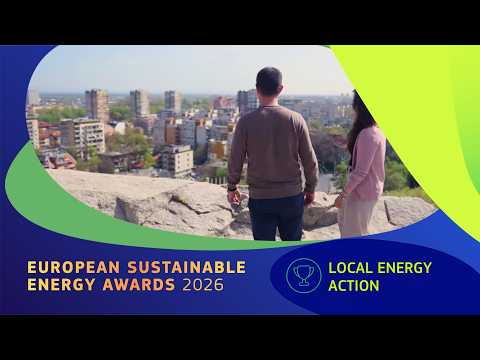
MultiHome Service Hub and Platform
Bulgaria
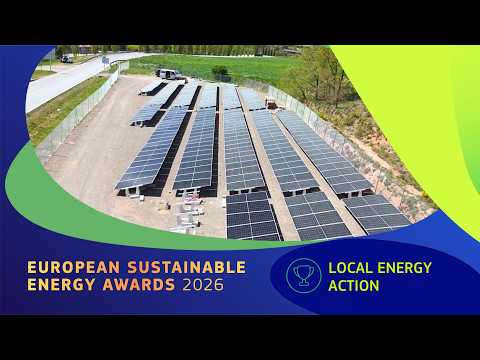
Nova Energia Osona
Spain