


Local Energy Action
The EUSEW Local Energy Action Award recognises implemented sustainable energy actions, driven by a group of citizens, consumers, a municipality or other stakeholders, which contribute to the clean energy transition at the community or local level.
Nova Energia Osona
Spain
Osona local energy partnership shortlisted for 2026 European Sustainable Energy Awards
For the past four years, the counties of Osona and Lluçanès in northern Catalonia have been developing a public-community energy project, ‘Nova Energia Osona’, based on an alliance between local authorities and energy communities. Representing 50 municipalities and a population of 175 000, the project aims to reduce CO₂ emissions by 42% by 2027.
“It is becoming clear that replacing one technology with another is not a neutral policy, and that the social dimension is key to ensuring its success. The energy transition must be fair, democratic, local, and renewable,” says project manager Moisès Subirana, explaining how large-scale projects often backed by outside interests, generate little local impact. In response to that, the 50 municipalities had agreed on the need to implement their own energy transition model, prioritising renewable energy production and social, economic, and environmental returns.
The model, which is partly funded under the EU LIFE programme, is built around three central actors: local governments, energy communities, and technical support from the Osona Local Energy Agency (ALEO), which has been actively involved in the local energy transition for more than 20 years, building a deep knowledge of the territory and its people.
“The key to the entire project is that a public-community partnership has been woven between the municipalities and the energy communities, where both promote projects and both benefit from the impacts generated,” says Subirana. For example, the municipality promotes a photovoltaic installation in a municipal facility and allocates part of it to the local energy community, which distributes the energy among residents. In this way, the municipality directly supports households, reducing electricity bills, while the energy community receives income to maintain the installation and promote new projects.
The results speak for themselves: municipal energy consumption has been cut by 15% over the past four years. Contributing to this achievement are 216 photovoltaic installations, with another 120 in the pipeline; 70% of these are collective, ensuring multiple users can benefit from a single system. Furthermore, some 110 electric vehicle charging points were installed, along with agreements for shared use of electric vehicles, and the public street lighting was upgraded with LED technology. The total investments attracted under the initiative exceed EUR 50 million.
The initiative works with 30 energy communities structured as non-profit consumer cooperatives, which have directly involved more than 2 000 households. Significantly, the initiative demonstrates that investment in the energy transition makes financial sense – “every euro invested in generates a return of between 10 and 80 euros thanks to the diversified funding scheme,” says Subirana.
The project relies on strong public consensus and citizen participation. “The question is not ‘what can you do for the energy transition?’ but rather ‘what do you need?’” he explains. “Once those needs are met, it becomes easier for them to get involved, whether they are municipalities or potential members of an energy community.”
Scaling up such initiatives is key to achieving the EU’s climate goals, says Subirana. “Replicating such a project means deepening the democratisation of the energy system. In a context of growing authoritarianism and the rollout of large-scale renewable energy parks, the promotion of a local, distributed, and fair energy system is increasingly emerging as a solid pathway to achieve the European energy and climate goals.”
Nova Energia Osona is one of three finalists shortlisted for the European Sustainable Energy Awards 2026 in the Local Energy Action category. The award recognises implemented sustainable energy actions, driven by a group of citizens or consumers, which contribute to the clean energy transition at the community or local level. It also inspires and motivates others to implement similar steps for an EU-wide deployment, resulting in economic and environmental benefits.
The other finalists in this category are 100 Projects Phasing out Gas in Austria and the MultiHome in Bulgaria. 100 Projects Phasing out Gas is Vienna's good-practice portfolio for phasing out fossil gas in existing buildings and driving the local clean-energy transition towards 100 per cent renewable heating. MultiHome offers a local cooperation platform for energy renovations in Bulgaria’s second city of Plovdiv.
The winner will be chosen through an online public vote, which is open from now until 31 May, and will be announced at an awards ceremony in Brussels on 9 June 2026.
EUSEW Awards celebrate Europe’s best clean energy projects and leaders
The European Sustainable Energy Awards (EUSEW Awards) recognise outstanding individuals, projects and initiatives that advance Europe’s transition to clean energy. The nine finalists have been selected by a high-level jury in three categories: SMEs Driving Energy Efficiency, Local Energy Action, and Women in Energy. The finalists will be submitted to an online public vote, which is open now until 31 May, and the winners will be announced during the EUSEW Awards Ceremony on 9 June 2026.
EUSEW 2026
The European Sustainable Energy Week (EUSEW) is the biggest annual event dedicated to renewables and efficient energy use in Europe, and is organised by the European Commission’s Directorate-General for Energy and the European Climate, Infrastructure and Environment Executive Agency (CINEA) The 20th edition of EUSEW will take place in a hybrid format, onsite in Brussels and online, from 9-11 June 2026. European Sustainable Energy Week consists of a three-day Policy Conference, the European Sustainable Energy Awards Ceremony, the Energy Fair and the activities dedicated to the Young Energy Ambassadors. Participants will also have access to independently organised Sustainable Energy Days, taking place in online and physical formats worldwide.
For updates on the agenda and location of the events, please refer to ec.europa.eu/eusew and the new European Sustainable Energy Week (EUSEW) page on LinkedIn. Join the conversation any time on social media via #EUSEW2026.
Other candidates in Local Energy Action
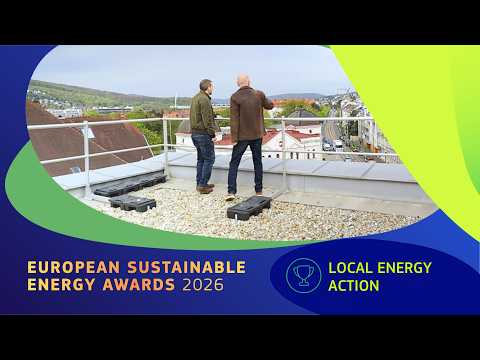
100 Projects Phasing Out Gas
Austria
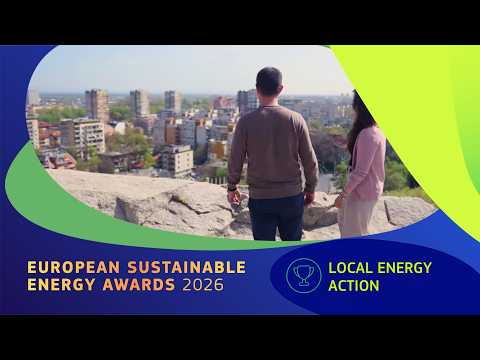
MultiHome Service Hub and Platform
Bulgaria